Why this decision goes wrong
A launch decision bundles several smaller decisions — audience, claim, price, timing, channel — and usually fails at whichever one nobody argued about. This playbook separates them so each can be examined on its own.
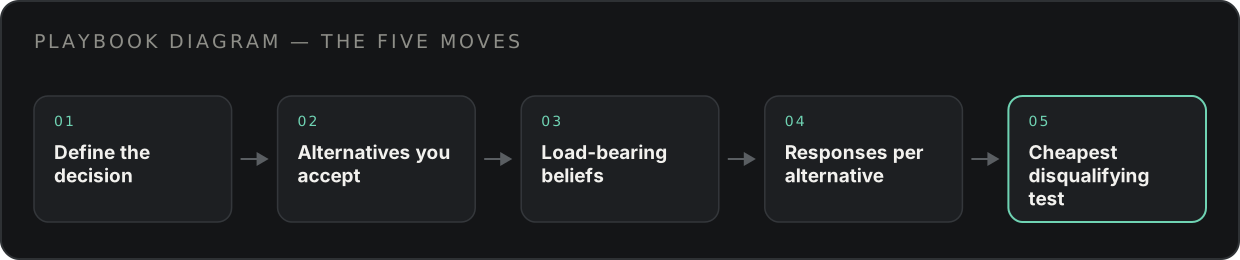
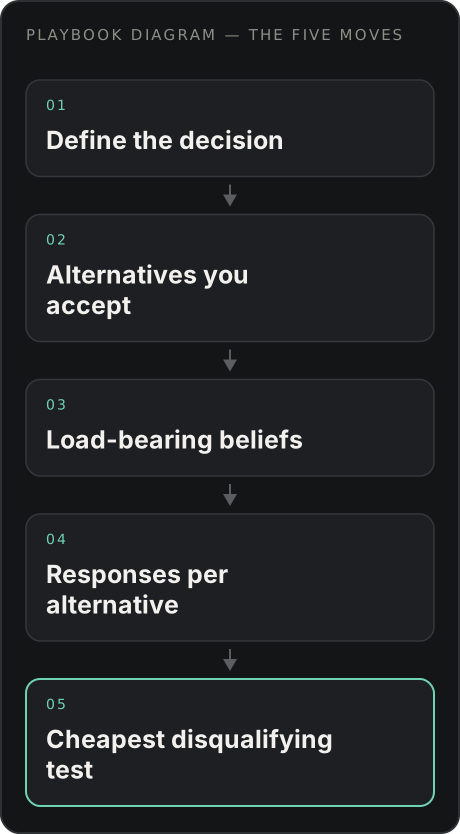
The five moves
- 01Define the launch as a decisionWrite the move in one sentence, with the date, the audience and the price in it. If the sentence needs a paragraph, the decision is still several decisions.
- 02Name the alternatives you would acceptA narrower launch, a later launch, a different first segment, a paid pilot, no launch. A decision with one option is a plan, not a choice.
- 03Surface the load-bearing beliefsList what has to be true for the launch to work: the problem is urgent, the price is acceptable, the channel reaches the buyer, the alternative is worse. Mark which are evidenced and which are hoped.
- 04Explore possible responses per alternativeFor each alternative, examine how different segments and market actors could respond — including who ignores it, who objects, and who arrives that you did not want.
- 05Choose the cheapest disqualifying testFind the test that could stop the launch, not the one that would make you feel better. Run it before the irreversible spend.
What you bring
- The launch scenario in one sentence
- Product and proposition detail
- Target segments and their alternatives
- Price and packaging options
- Channel and timing constraints
What you get out
- A comparison of launch alternatives
- Where possible responses diverge by segment
- The beliefs the plan depends on
- A short list of real-world tests, in priority order
Common failure modes
- Debating confidence instead of cost of being wrong
- Testing the launch you already chose
- Treating one enthusiastic segment as the market
- Reading a simulated response as a forecast
Running it in ATLASIO.ai
Set the decision up as a scenario, add the evidence you hold, and explore how simulated customers and market actors could respond to each alternative. The output is decision support — possible outcomes and the assumptions behind them, not a guarantee.