Why this decision goes wrong
Pricing decisions rarely fail on arithmetic. They fail because a number was chosen without deciding which customers it invites, which it declines, and what claim has to be true for it to feel fair.
The five moves
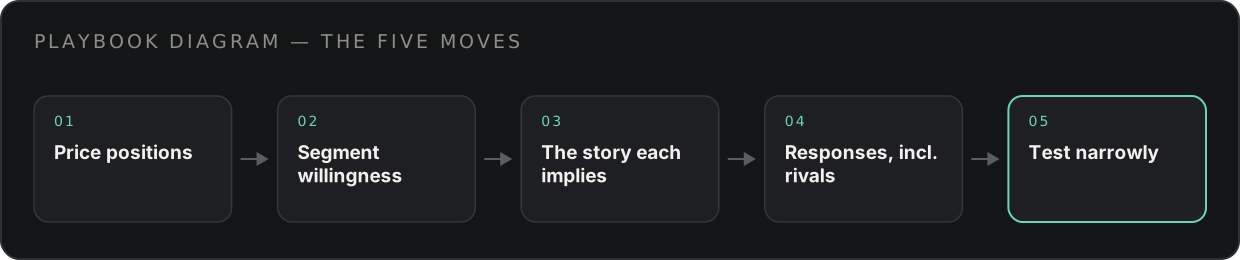
- 01Turn the price into positionsBuild two or three complete price positions — number, packaging, claim, audience — instead of a single candidate number.
- 02Segment willingness, don’t average itTreat willingness to pay as a spread. State explicitly which part of it each position serves and which part it gives up.
- 03Write the story each price impliesWhat does the buyer have to believe? What comparison does the price invite? What has to be visibly better than the cheaper option?
- 04Explore responses, including competitorsExamine how segments and rivals could respond to each position — not only whether customers accept the number.
- 05Test the most consequential position narrowlyOne segment, one market, one channel. Reprice everything only after the narrow test.
What you bring
- Current price and packaging
- Candidate price positions
- Segment definitions and alternatives
- Competitor set and their claims
- Margin and channel constraints
What you get out
- Comparison of price positions
- Which segments each position invites or loses
- Possible competitor responses
- The narrow test to run first
Common failure modes
- Copying a competitor’s number and inheriting their constraints
- Averaging willingness to pay across segments
- Changing price without changing the story
- Assuming rivals hold still
Running it in ATLASIO.ai
Set the decision up as a scenario, add the evidence you hold, and explore how simulated customers and market actors could respond to each alternative. The output is decision support — possible outcomes and the assumptions behind them, not a guarantee.