The plain version
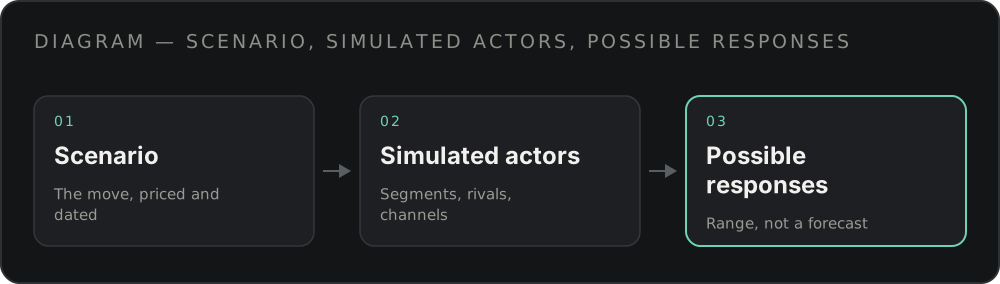
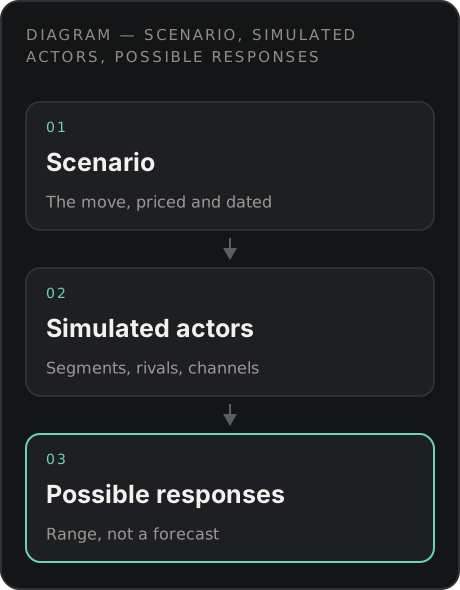
A market simulation is a structured way of asking: if we made this move, how might different customers and market actors respond? Instead of one averaged answer, you get a set of possible responses and the reasoning behind each.
It sits between analysis, which describes what happened, and research, which reports what people said. Simulation explores what could happen next, given available evidence.
What goes in
A specific decision or scenario. Whatever evidence you already hold — product information, market and customer research, strategy documents, prior results. And an explicit set of assumptions, because every simulated response depends on them.
How to read the output honestly
Read direction and divergence, not decimals. Which paths separate? Which audiences respond differently? Which conclusions collapse if one assumption changes? A response that is stable across defensible assumptions is worth more than a precise-looking number.
What simulation cannot do
It cannot guarantee an outcome, replace a real market test, or invent evidence that does not exist. Simulated customers are models, not people. Used well, simulation narrows the field and tells you what to test; used badly, it becomes a confident-sounding excuse to skip testing.
Simulation is a way of arguing carefully about the future, not a way of knowing it.
- What exactly is the scenario being explored?
- Which assumptions is the response resting on?
- Where do the paths disagree, and why?
- What would we test in the real world next?
ATLASIO.ai lets you set up this kind of question as a scenario and explore how simulated customers and market actors could respond, using the evidence you already hold. Results are decision-support signals — possible outcomes, not guarantees.
Editorial perspective. No customer names, studies, statistics or results are cited on this page.